
Under the Covers: 7 Common Questions About Gym Pad Foam
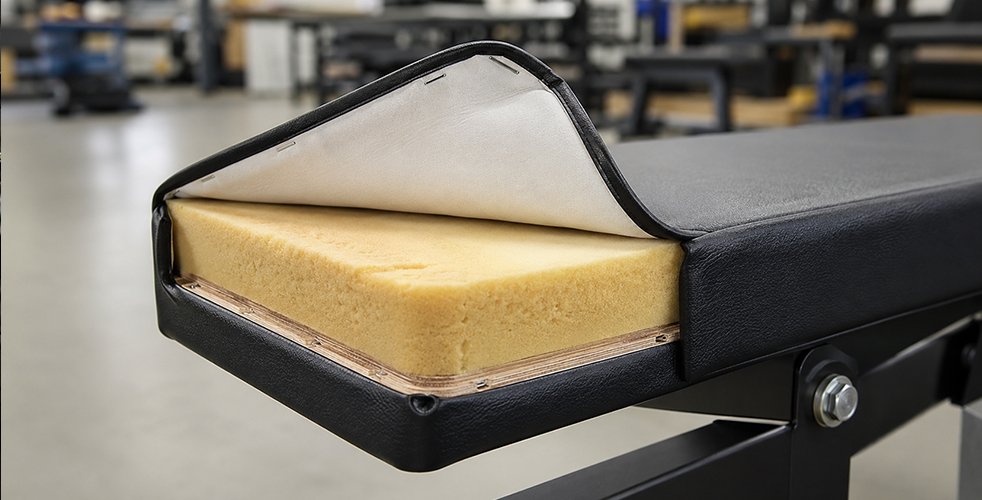
The condition of a gym pad cannot always be judged by its cover. Beneath the vinyl, the foam works alongside the backing board and fixings to cushion the user, distribute pressure and maintain the pad’s intended shape. Its density, thickness and resilience must be appropriate for the equipment and the demands of a commercial gym.
Repeated compression can gradually reduce the foam’s resilience, while perspiration or cleaning liquids may penetrate through small splits, punctures or failed seams. This can leave the foam collapsed, misshapen or moisture-contaminated even when the external upholstery still appears serviceable.
Understanding the condition of the complete pad is essential when deciding whether it needs a local repair, recovering, replacement foam or a full rebuild. We answer some of the most common questions about what is happening under the cover.
1. Can gym-pad foam deteriorate if the cover looks intact?
Yes. Repeated loading can gradually compress the foam and reduce its ability to return to its original shape. This may happen without any obvious splits or damage to the vinyl.
Loose upholstery, uneven contours and differences in firmness between similar pads can all indicate deterioration beneath the surface.
2. How can I tell if the foam has collapsed?
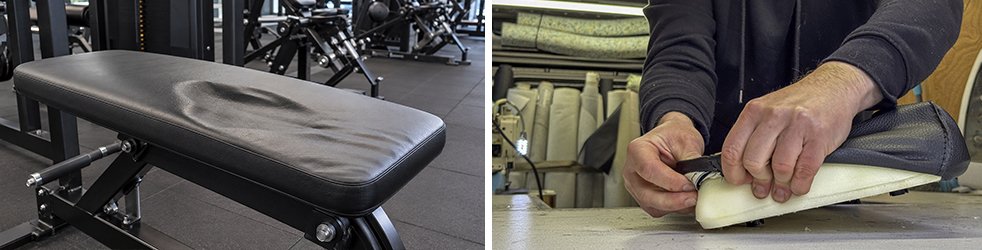
Common warning signs include:
- Areas that remain compressed
- Unusually soft or hard sections
- Lumps, dips or misshapen edges
- Loose or wrinkled vinyl
- One side of the pad sitting lower
- The backing board becoming noticeable
- Differences in firmness between matching pads
Pressing across the pad and comparing it with equivalent equipment can help reveal gradual deterioration.
3. Can moisture get inside a gym pad?
Yes. Perspiration and cleaning liquids can enter through small punctures, splits or failed seams. Although the outside can still be wiped clean, moisture trapped inside the pad may be difficult to remove.
Recurring odours, dampness, discolouration and changes in the foam’s texture may indicate moisture contamination.
4. Is replacing the cover enough?
Only if the foam, backing board and fixings remain serviceable. Recovering a pad without addressing collapsed or contaminated foam may improve its appearance but will not resolve the underlying problem.
Gym Wizard assesses the complete pad before recommending whether it should be repaired, recovered or rebuilt.
5. When does the foam need replacing?
Foam replacement may be appropriate when it has:
- Permanently collapsed
- Lost its original shape
- Developed hard or soft areas
- Become damaged or contaminated
- Stopped supporting the cover correctly
- Exposed the backing board through normal use
The replacement foam should be selected according to the pad’s design and expected loading.
6. Does the entire gym pad need rebuilding?
Not always. A local cover repair may be enough where the damage is minor and the internal components remain sound. At other times, the vinyl may need replacing while the existing foam and backing board can be retained.
A complete rebuild is generally considered when deterioration affects several components, including the cover, foam, backing board or fixings.
7. How can Gym Wizard help?
Gym Wizard can inspect the complete pad and determine whether it requires a local repair, new upholstery, replacement foam or a full rebuild. This ensures the work addresses the pad’s actual condition, not simply what is visible on the surface. Our mobile workshop vehicles can reupholster gym pads on site, minimising operational disruption.
Contact us today for your next gym pad reupholstery project.